

Spring is supposed to be a happy season.
Longer days. New growth. The world is waking back up after winter. Everyone seems to lift a little.
And for many people, it is. But for others, spring brings something more complicated. A restlessness. A sense of urgency that’s hard to name. An awareness — brought into sharper focus by the season’s energy — that something in your life isn’t quite right, or isn’t quite enough.
If that sounds familiar, you’re not broken. You might just be paying attention.
The Clocks Change. And Something Shifts.
Today, the clocks go forward. And there’s something about that first evening of extra light that catches people off guard. The day stretches out, and suddenly there’s an hour of light you didn’t have yesterday. An hour that feels oddly exposing.
Because daylight is clarifying. It lifts the lid. And for some people, that extra hour of light doesn’t just illuminate the garden — it illuminates things they’ve been quietly carrying through the winter without fully looking at them.
That’s not a bad thing. But it can feel unsettling.
Why Spring Can Feel Like Too Much
More light means more serotonin. More energy. The body wakes up. And that can be wonderful — but it can also mean that feelings you’ve been managing perfectly well in the low hum of winter suddenly have more room to move.
Anxiety can spike in spring. So can a sense of grief, or loss, or longing. If you find yourself feeling more emotional as the season changes, that’s not you going backwards. That’s you thawing.
Winter has a way of muffling things. The dark, the cold, the pulling inward — it’s easier to hunker down and not look too closely. But when the light comes back, things become more visible. Including the things we’ve been avoiding.
The relationship that isn’t working. The job you’ve outgrown. The life that looks fine from the outside but feels hollow inside. Spring doesn’t create these things. It just makes them harder to ignore.
The Spring Gap
There’s something I’ve noticed, both in myself and in the people I work with. Spring has a way of widening the gap between the life we’re living and the life we sense we could be living.
And I’ve been feeling it myself this week.
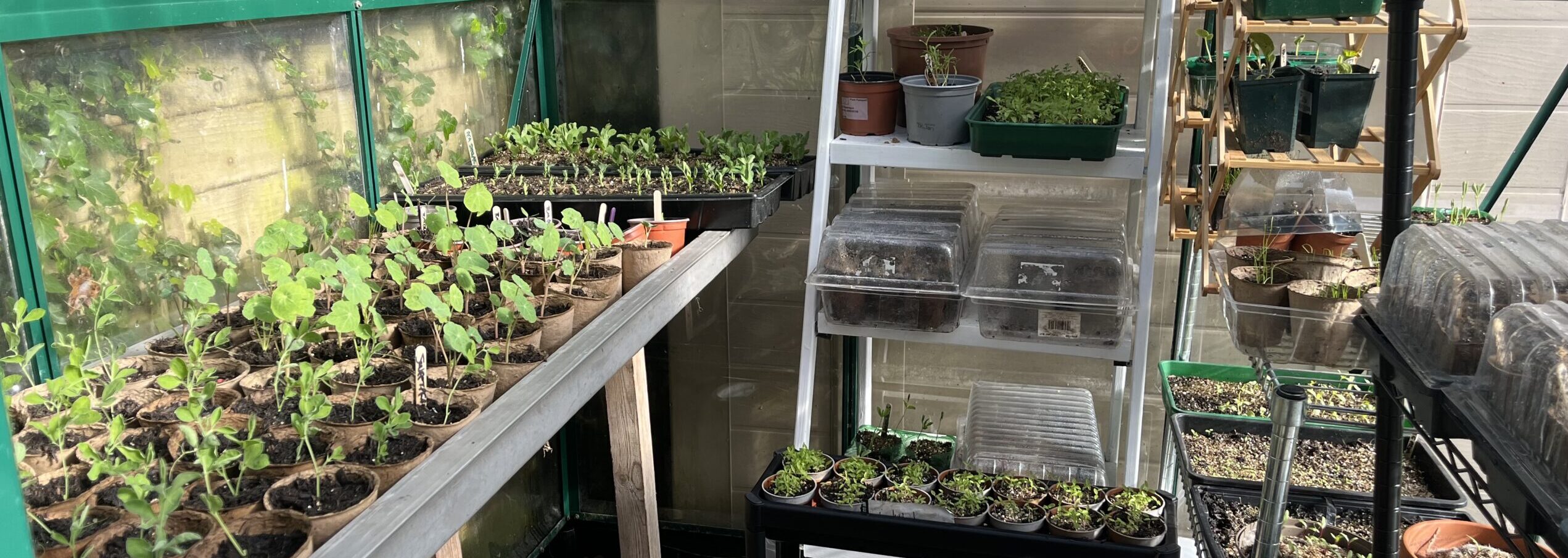
I’ve just got my first ever allotment. I am absolutely ready to get going, seeds lined up, plans made, enthusiasm through the roof. My greenhouse is already full of seedlings. And yet I’m having to hold myself back, because the soil isn’t warm enough yet. There’s more still to sow, but the conditions aren’t quite right. Sow too early, and the seeds won’t thrive. The timing has to be right.
So while I wait, I’m planning something else. I’m thinking about what structures I’ll build: the canes and frames for the beans and the peas, maybe an arch for all the sweet peas I’ve got carried away sowing. The scaffolding that will hold everything up once the growing really gets going. At first, it will look like a collection of sticks in the ground. But it’s not nothing. It’s preparation. It will be the framework that makes real growth possible.
I find myself thinking — this is exactly what it feels like when you know something needs to change, but the moment hasn’t quite arrived yet. The readiness is there. The seeds are there. The scaffolding is going up. But growth can’t be forced. It has to be tended, and it has to be supported.
Sometimes life is like that too. And sometimes therapy is the scaffolding, not the thing that does the growing for you, but the structure that holds you steady while you do.
Why the Restlessness Is Worth Listening To
Restlessness has a bad reputation. We tend to treat it as something to manage or suppress — distract yourself, keep busy, wait for it to pass.
But restlessness is information. It’s pointing at something. A need that isn’t being met, a direction that’s calling to you, a part of yourself that wants more room to breathe.
Getting curious about it rather than pushing it aside is usually far more useful than waiting for it to pass. Because if you don’t listen to it now, it tends to get louder.
The question isn’t,
“How do I make this feeling go away? “
It is
“What is this feeling trying to tell me?”
Spring as a Starting Point
There’s an energy to spring that can be genuinely useful if you harness it in the right direction.
Not the frantic kind — not the “I need to overhaul my entire life by June” kind. But the quieter, more intentional energy of beginning something. Taking one step towards something that matters.
Back at my allotment, I’m learning that patience and readiness can exist at the same time. You can be completely prepared, full of intention, and still have to wait for the right conditions. That’s not wasted time. That’s tending. That’s paying attention.
The seeds in my greenhouse are proof that something is already underway, even before it’s visible.
Maybe that’s true for you, too.
So What Do You Actually Do With It?
You don’t have to have it all figured out. Spring isn’t a deadline.
But if something has been quietly nagging at you — a relationship, a direction, a version of yourself you’ve lost touch with — this is a good season to stop filing it under “later.”
Later has a way of becoming never.
It doesn’t have to be dramatic. It might just be:
- Writing it down. Getting it out of your head and onto paper.
- Talking to someone you trust about what’s stirring.
- Book that appointment you’ve been putting off.
- Or simply sitting with it, honestly, for five minutes, without distractions.
Sometimes the most useful thing you can do is just stop pretending the feeling isn’t there.
The season is changing. The light is coming back. And sometimes not always, but sometimes that’s exactly the nudge we needed.
If spring is bringing something up for you, therapy can be a good place to bring it. You don’t need to be in crisis to come. You just need to feel ready to look a little more honestly at what’s there.
I’d love to hear from you.